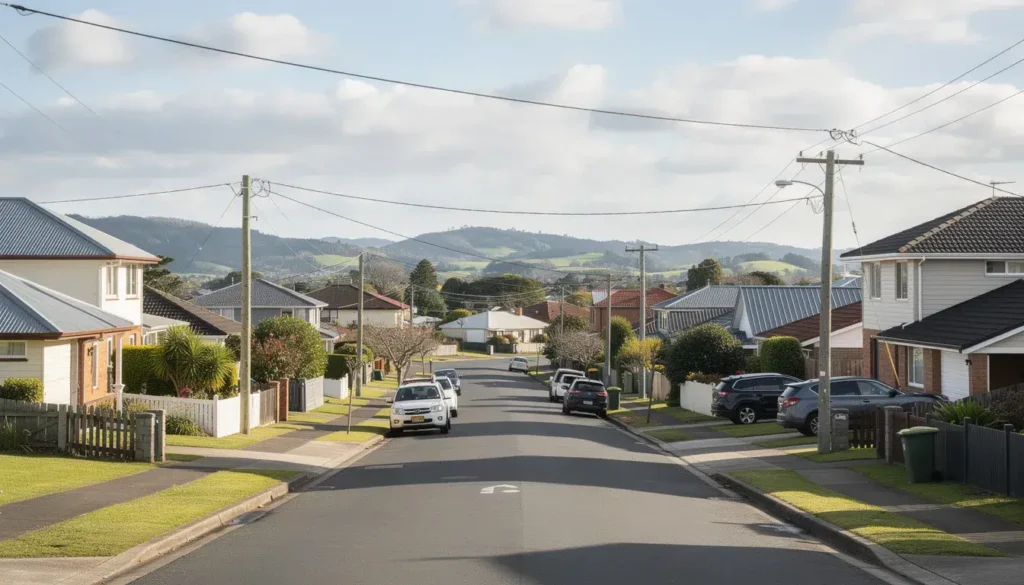
Welcome to our comprehensive guide on the cost of roofing in South Auckland! Whether you’re planning a roof replacement, repair, or new installation, we’re here to provide you with the essential information you need to make informed decisions. Explore detailed cost breakdowns, material options, budgeting tips, and expert advice tailored specifically for South Auckland homeowners and businesses. Let’s help you navigate your roofing project with confidence and ease.
Key Takeaways
Most South Auckland reroof jobs in 2026 cost between $12,000 and $30,000, or roughly $130–$260 per square meter including roofing materials and labour. Understanding these figures upfront helps you budget realistically and avoid sticker shock when quotes arrive. If you’re also interested in gutter replacement cost, be sure to understand those numbers as well when budgeting for exterior home improvements.
- South Auckland ballpark prices (2026): Long-run metal roofing $140–$220/m², metal tiles $130–$200/m², concrete tiles $160–$260/m², membrane/flat roofs $180–$280/m²—all inclusive of standard scaffold and GST
- Main cost drivers: Roof size, pitch, access difficulties (narrow South Auckland driveways, steep sections), and your chosen material determine where you land in these ranges
- Quote essentials: Always get at least three written quotes from South Auckland-based roofers and check what is and isn’t included—removal, disposal, insulation, roof flashings, and permits can vary significantly between quotes
- What this guide covers: How to estimate your own roofing cost, practical ways to save money without cutting quality, and the key questions to ask local roofing companies before signing anything
Table of Contents
Average Roofing Costs in South Auckland
These figures reflect typical 2025–early 2026 pricing for residential and commercial properties across suburbs like Manurewa, Papatoetoe, Papakura, Flat Bush, and Takanini. The ranges assume a standard roof replacement on homes with 120–220 m² of roof area.
Whole-Roof Price Ranges
| Property Size | Roof Area | Typical Cost Range (2026) |
|---|---|---|
| Small units/townhouses | 80–120 m² | $12,000–$22,000 |
| Standard 3–4 bedroom home | 140–200 m² | $18,000–$35,000 |
| Large two-storey home | 200–300 m² | $30,000–$55,000+ |
Per-Square-Metre Pricing by Material
For South Auckland re roofing including labour, here’s what you can expect to pay:
- Asphalt shingles (where used): $120–$190/m²
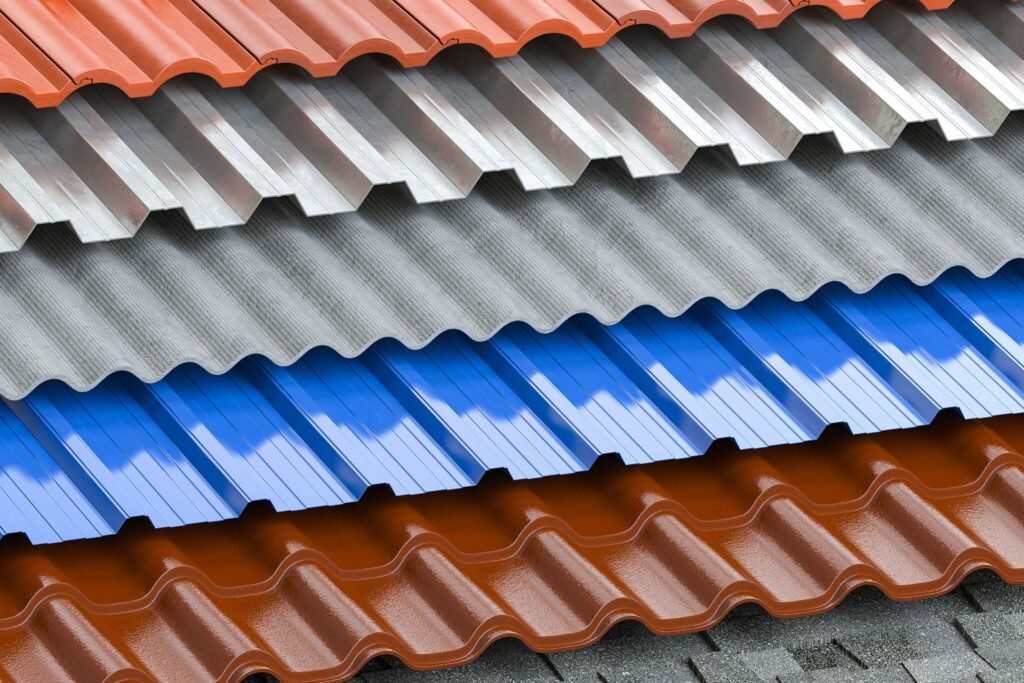
- Long-run Colorsteel or similar metal: $140–$220/m²
- Metal tiles: $130–$200/m²
- Concrete tiles or clay tiles: $160–$260/m²
- Membrane/flat roofs (butynol/TPO): $180–$280/m²
Older State houses and 1960s–1980s builds in Ōtara, Māngere, and Clendon typically feature simple pitched roof types—straightforward gable designs that keep labour costs toward the lower cost end of these ranges. Newer developments in Flat Bush and Karaka often have complex, multi-gable roof design with numerous valleys and hips, pushing costs toward the upper end.
These prices assume removal of one existing roof layer, standard scaffold, basic safety gear, and standard colour steel metal. Premium materials, complex flashing work, or two-storey access requirements will push you toward higher figures.
Key Factors That Affect Roofing Cost in South Auckland
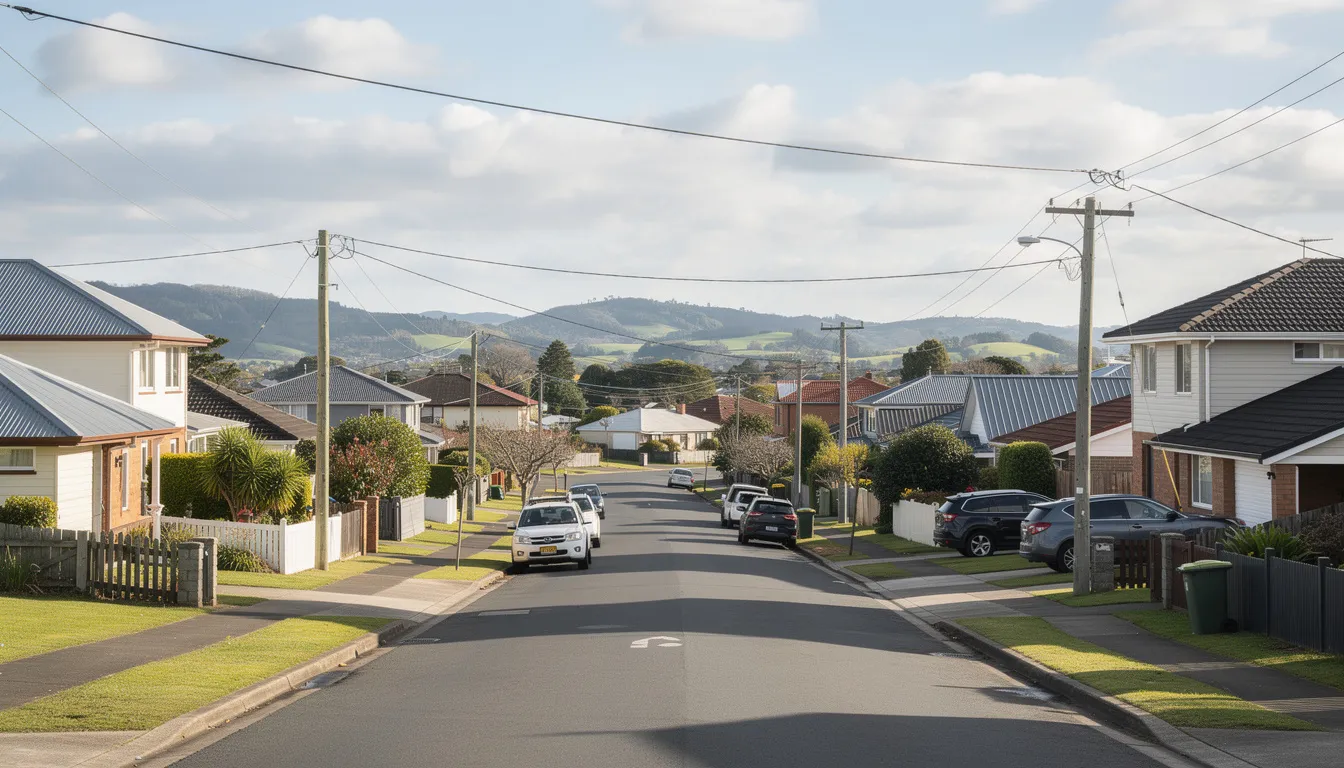
Many cost drivers are consistent across New Zealand, but South Auckland’s mix of older housing stock, clay soils, and densely packed subdivisions creates specific challenges. Access limitations and the condition of an existing roof can affect labour time significantly in this region.
The main factors that affect pricing include:
- Roof size in m²—larger roofs require more materials and labour hours
- Material type—metal, tile, and membrane options vary significantly depending on specification
- Roof pitch and shape—steeper and more complex designs increase labour
- Number of storeys—two-storey homes need more extensive scaffolding and safety systems
- Access for scaffold and rubbish removal—tight driveways and rear lots add time
- Condition of framing and sarking—rotten timber or damaged underlay adds repair costs
- Extra features—skylights, chimneys, and solar panel mounts create more work
To illustrate, consider a simple 120 m² single-storey tile-to-metal reroof in Papatoetoe versus a 220 m² two-storey long-run metal replacement in Flat Bush with complex valleys. The Papatoetoe job might come in around $22,000–$28,000, while the Flat Bush property could easily reach $50,000–$65,000 despite similar per-m² rates—complexity and height multiply the overall cost.
Local labour costs in South Auckland align broadly with the greater Auckland region, though jobs in outer areas like Pukekohe or rural South may include additional travel or traffic delay allowances in quotes.
Material Choice and Typical South Auckland Pricing
Material selection is usually the single biggest factor affecting your final bill. Most South Auckland reroofs now use long-run metal roofing, which offers excellent durability against the region’s heavy rain and occasional storms.
Long-run metal (Colorsteel or equivalent)
- Materials only: $30–$55/m²
- Installed: $140–$220/m²
- Low maintenance with 50+ year lifespan potential
Pressed metal tiles
- Materials only: $35–$60/m²
- Installed: $130–$200/m²
- Traditional tile appearance without the weight
Concrete tiles (common on 1970s–1990s Auckland homes)
- Materials only: $45–$80/m²
- Installed: $160–$260/m²
- Heavy—may require structural checks before roof installation
Bitumen/asphalt shingles (less common, seen on some villas and modern townhouses)
- Materials only: $30–$50/m²
- Installed: $120–$190/m²
- Shorter lifespan of 20–30 years in Auckland’s wet climate
Membrane roofs for flat/low-slope (butynol/TPO)
- Materials only: $70–$120/m²
- Installed: $180–$280/m²
- Requires experienced installer for proper waterproofing
When selecting roofing materials, consider South Auckland’s climate conditions. Properties closer to the Manukau Harbour face salt-laden air that can accelerate corrosion on lower-grade metals. High UV exposure and heavy rain mean quality materials with proper coatings deliver better long term costs than cheap alternatives that need earlier replacement.
Some South Auckland subdivisions have design guidelines or covenants restricting roofing options and colours. Check these before finalising material choices—covenants can limit your ability to use cheaper roofing solutions.
Roof Size, Pitch, and Design Complexity
While roofing is priced largely by area, steepness and shape can add 20–40% to labour costs. A steep or complex roof structure requires more time, better safety equipment, and skilled work on flashings and valleys.
Example comparison:
| Feature | Simple Roof (Manurewa) | Complex Roof (Flat Bush) |
|---|---|---|
| Roof area | 150 m² | 150 m² |
| Pitch | 20–25° gable | 35° hip-and-valley |
| Approximate per m² rate | $150–$180 | $200–$240 |
| Total estimate | $22,500–$27,000 | $30,000–$36,000 |
The difference comes down to extra cutting, additional roof flashings at valleys and hips, and more extensive safety setup for the steeper roof pitch.
Roofs above approximately 30° typically require more scaffolding and harness systems. This can add a full day or more to the schedule on a standard home, increasing labour costs accordingly.
Complex designs with multiple penetrations—skylights, chimneys, and solar panel mounts—are increasingly common in newer builds and must be budgeted separately. Each penetration requires custom flashing work that adds both materials and skilled labour time.
Access, Scaffolding, and Site Conditions
Many South Auckland homes sit on tight sections or rear lots accessed via a right-of-way, which affects crane access, truck positioning, and scaffold placement. These site conditions directly impact your roofing project costs.
Typical 2026 scaffold allowances:
- Single-storey roof (Māngere Bridge, Papatoetoe): $2,000–$4,000
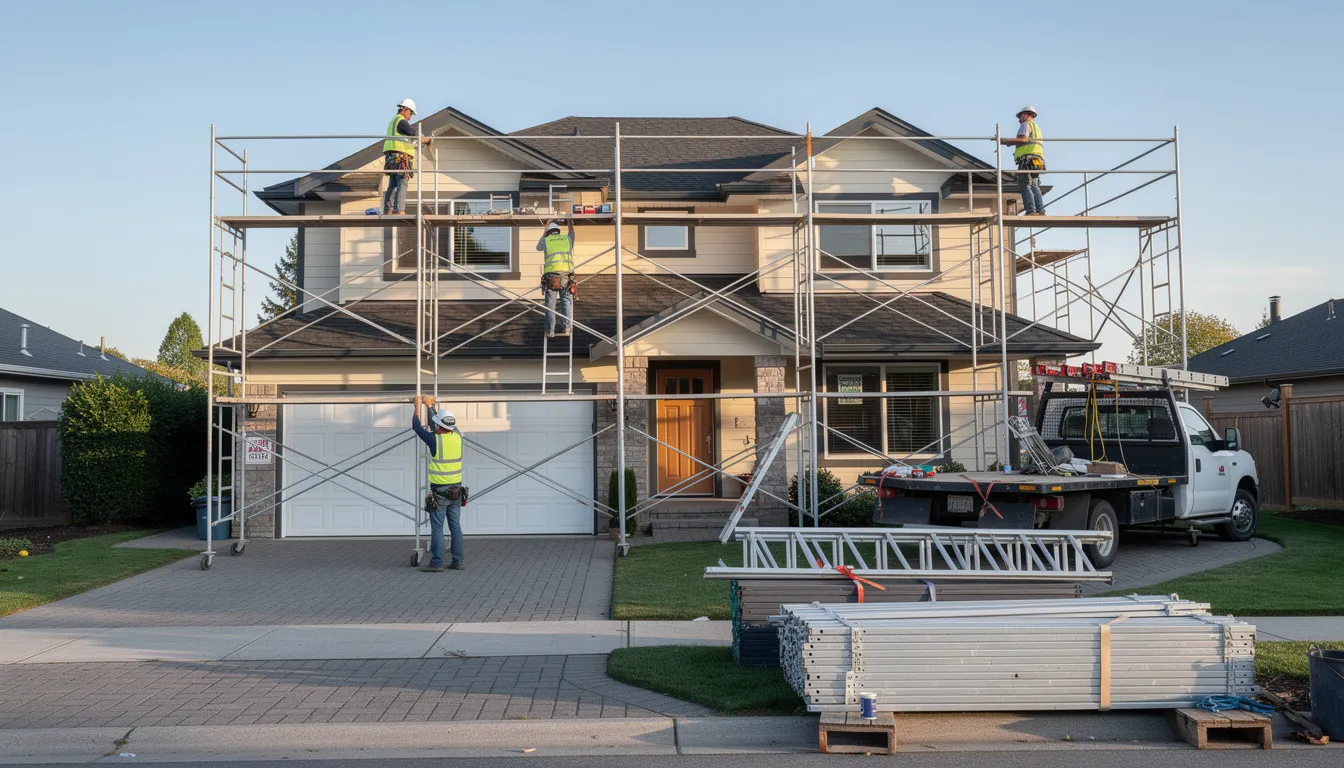
- Full wrap scaffolding, two-storey home (Dannemora, Flat Bush): $4,000–$8,000+
Additional access-related costs to consider:
- Difficult driveway access requiring manual carry of materials
- Limited parking for skip bins, adding transport time
- Tree trimming before roofing work can commence
- Ground protection on soft or sloped sections
South Auckland’s clay soils become particularly slippery during winter months. On some sections, this may extend job time and require better ground protection, slightly increasing labour costs. Your roofing contractor should assess site conditions during their quote visit.
Condition of Existing Roof and Structure
Older South Auckland housing—particularly 1950s–1970s builds—may have rotten battens, sagging rafters, or hazardous materials like asbestos-containing products. These hidden issues only become apparent once the old roof comes off, and they significantly affect pricing.
Typical additional costs:
| Issue | Approximate Cost Addition |
|---|---|
| Replacing battens/minor framing repairs | $1,000–$4,000 |
| Full sarking replacement | $25–$45/m² |
| Asbestos cement roof removal (certified) | $3,000–$8,000+ |
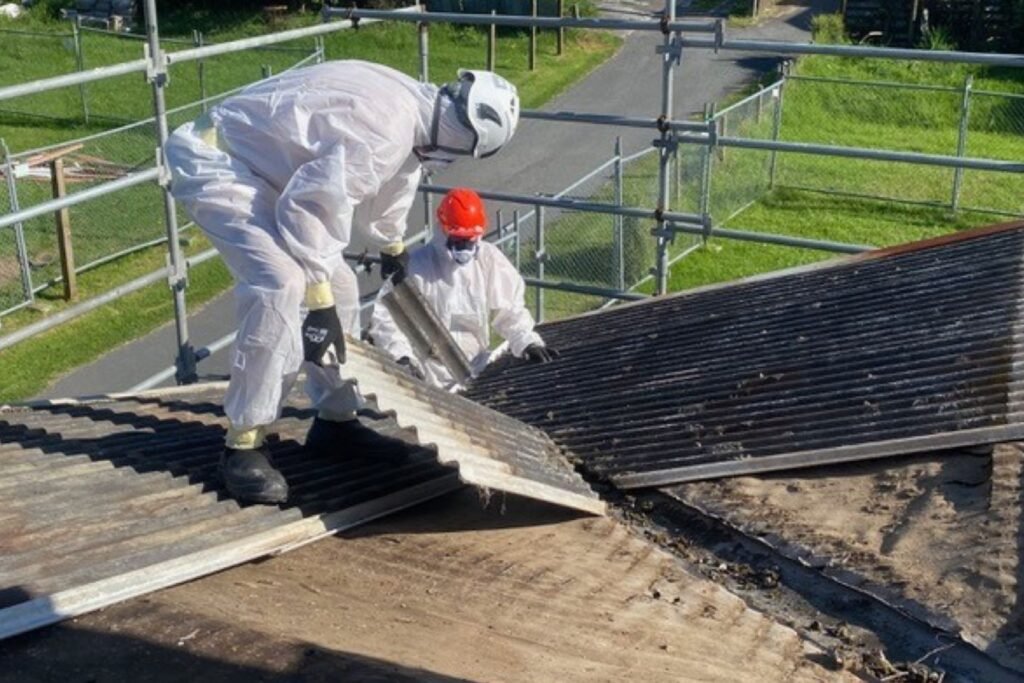
Old roofing materials containing asbestos—still found on some garages and older sheds—require certified removal with air monitoring and special disposal. This is not optional work; it’s legally mandated and significantly adds to costs involved.
A reliable roofing services provider will lift sheets or tiles in several spots during their pre-quote inspection to check for hidden damage. This due diligence protects both parties from surprise variations once work begins. Be wary of any quote given without an on-site inspection.
Detailed Cost Breakdown for a South Auckland Reroof
Understanding how your quote breaks down helps you evaluate whether you’re getting fair value. A typical reroof includes materials, labour, access equipment, removal/disposal, and extras like insulation or gutters. The overall cost splits roughly as follows on most jobs.
This section uses worked examples based on a 160 m² single-storey home in Papakura and a 210 m² two-storey home in Flat Bush to show how components add up.
Material and Labour Components
On many South Auckland metal reroofs, the cost breakdown looks approximately like this:
- Materials: 40–55% of total cost
- Labour: 35–50% of total cost
- Scaffold and safety: 10–15% of total cost
- Overhead and GST: Remainder
Worked example: 160 m² long-run metal reroof in Papakura
Total at $180/m²: ~$28,800
| Component | Approximate Cost |
|---|---|
| Materials (Colorsteel sheets, underlay, flashings) | $12,000–$15,000 |
| Labour (removal, installation, finishing) | $9,000–$11,000 |
| Scaffold and safety equipment | $3,000–$4,000 |
| Overhead and GST | Remainder |
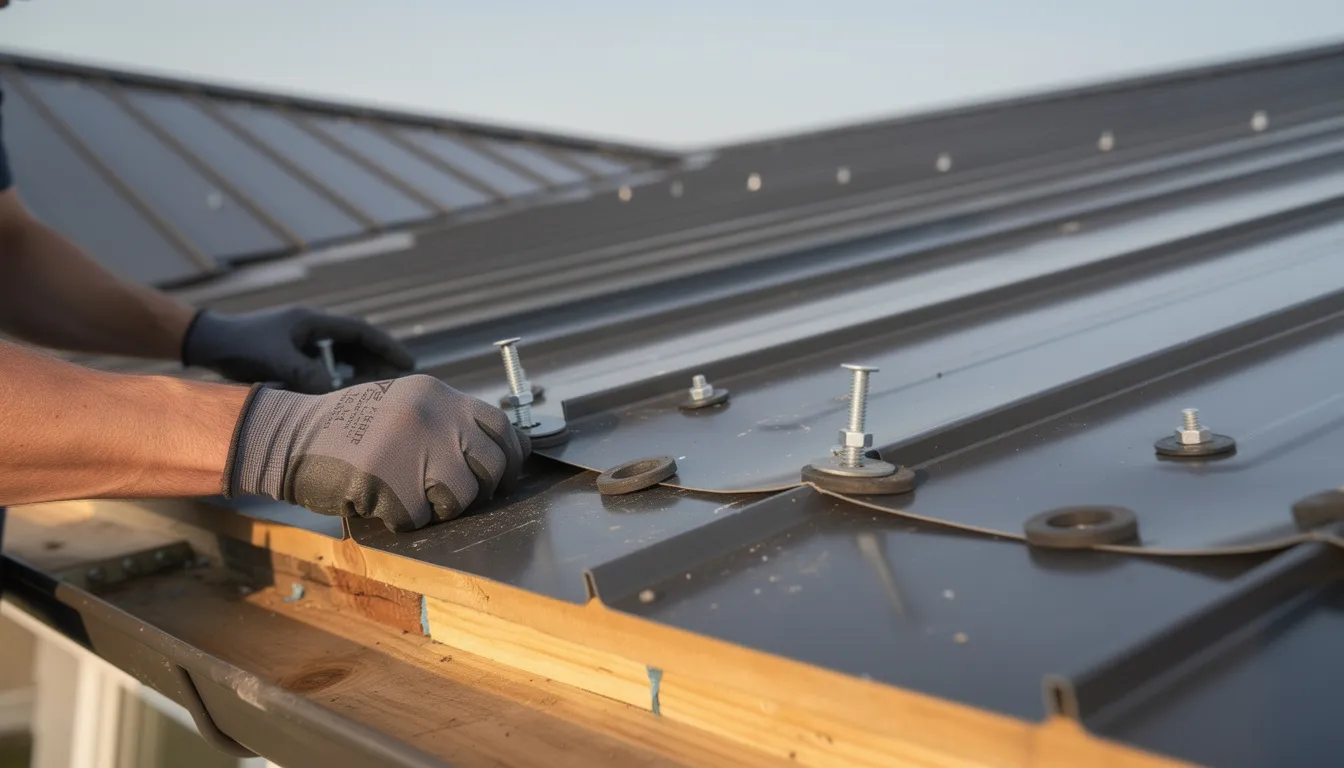
Higher-skill details like custom flashings around chimneys or parapets—common in some older Māngere bungalows—add labour hours beyond standard rates. Expect an extra $500–$2,000 for complex flashing requirements.
Weekend or urgent roof repairs following storm damage may incur higher hourly rates. Labour costs for emergency call-outs can run 20–50% above standard rates, though this is sometimes partially recoverable through insurance.
Removal, Disposal, and Asbestos Considerations
Stripping the old roof is itemised separately in most South Auckland quotes, typically adding $20–$45/m² excluding any asbestos work.
Standard waste removal costs:
- Medium-sized home (non-hazardous materials): $1,000–$2,500
- Includes skip bin hire, transport to transfer station, and dump fees
- Distance to disposal facility affects final cost
Asbestos considerations:
If a 100 m² asbestos cement garage roof is discovered in Ōtara (for example), certified removal might cost $4,000–$7,000 including air monitoring and special disposal at approved facilities. This work must be handled by licensed contractors—there’s no cost effective option that skips proper procedures.
When reviewing quotes, ask explicitly whether removal, skip bins, and dump fees are included or itemised separately. Some roofing companies bundle these costs while others list them as variations, making apples-to-apples comparison difficult without clarification.
Extras: Insulation, Gutters, Skylights, and Flashings
Many South Auckland homeowners use roof replacement as an opportunity to upgrade insulation, gutters, or add skylights. These improvements add upfront cost but can improve energy efficiency and property value.
2026 pricing for common extras:
| Extra | Typical Cost Range |
|---|---|
| Ceiling insulation top-up (while roof open) | $15–$30/m² installed |
| New Colorsteel fascias and gutters (3–4 bed home) | $2,000–$5,000 |
| Basic fixed skylight (supplied and installed) | $1,000–$2,000 each |
| Opening or larger skylights | $2,000–$4,000+ each |
| Custom flashings, box gutters, parapet work | $1,000–$5,000+ |
Insulation upgrades while the roof is open offer excellent value—access is easy, and you’ll notice the difference in comfort immediately. Properties in areas with heavier rainfall, such as the foothills near the Hunua Ranges, may benefit from larger gutter profiles. This marginally increases cost but prevents overflow issues during intense storms.
Example Roofing Cost Scenarios in South Auckland
These realistic, numbers-based scenarios help you map earlier price ranges onto actual home types common in South Auckland. Each example covers property type, suburb, roof area, material, complexity, and a 2026 total cost range including GST.
These examples are illustrative—always confirm with local roofers via an accurate estimate based on your specific property.
Small Single-Storey Home in Manurewa
Property: Typical 3-bedroom 1970s weatherboard home with a simple 120 m² gable roof, previously in concrete tiles, now being reroofed in long-run metal.
Scope of work:
- Tile removal and disposal
- Minor batten repairs (allowance for rotten sections)
- New underlay
- New Colorsteel-style long-run roofing
- Standard scaffold on two sides
- New standard gutters
Total cost range: $20,000–$28,000 (roughly $165–$230/m²)
Factors pushing toward the higher end include rotten framing requiring more materials, discovery of asbestos, or difficult access from a narrow driveway. A well maintained roof structure with easy access would sit at the lower end.
Expected duration: 3–6 working days in good weather
Modern Two-Storey Home in Flat Bush
Property: 4–5 bedroom two-storey home in Flat Bush/Botany Downs built in the 2000s with a 220 m² complex hip-and-valley roof, currently metal tiles being replaced with new roof installations in long-run metal or upgraded metal tiles.
Scope of work:
- Full wrap scaffolding with safety nets
- Removal of existing metal tiles
- Numerous valley flashings and custom work
- Careful work around existing skylights and solar panels
- Premium roofing materials specified in covenant
Total cost range: $40,000–$65,000+ ($180–$295/m²)
The higher per-m² rate reflects roof design complexity and two-storey height. Commercial roofing contractors experienced with larger roofs often handle these jobs, as they require more extensive project management.
Expected duration: 7–12 working days, with higher weather sensitivity due to exposure
Flat or Low-Slope Roof in Mangere Bridge
Property: 140 m² single-storey home or unit block in Māngere Bridge with an ageing bitumen or torch-on flat roof being replaced with modern membrane (butynol/TPO).
Scope of work: For more details on material options and suitability, see our Ultimate Guide To Different Types Of Roof Tiles NZ.
- Stripping old membrane
- Repairing substrate and adding new falls where needed
- Installing new membrane and parapet flashings
- Ensuring adequate drainage to internal or external gutters
Total cost range: $28,000–$45,000 ($200–$320/m²)
Flat roof replacement costs often exceed simple pitched metal roofs on a per-m² basis due to substrate repairs, waterproofing complexity, and the critical importance of proper drainage. Choosing a membrane installer experienced with South Auckland rainfall and local building codes is essential for these jobs.
Expected duration: 5–10 working days depending on substrate condition
How to Budget for a Roofing Project in South Auckland
Budgeting for a reroofing project means working backwards from realistic per-m² rates, allowing 10–15% contingency for unexpected issues, and factoring in seasonal weather delays common across the greater Auckland region.
This section walks you through measuring your roof, choosing materials, applying rough estimate rules-of-thumb, and then refining through multiple quotes. Also consider related items like ceiling insulation, gutters, and minor structural repairs—common add-ons in older South Auckland homes.
Initial Research and Getting Quotes
Gather at least three written quotes from South Auckland roofers. Ideally include one larger roofing company and one or two local specialists. This gives you a range of approaches and pricing to compare.
Each quote should clearly show:
- Per-m² rate and total price
- Labour and material split
- Scaffold costs
- Removal and disposal fees
- Allowances for framing repairs
- GST (always confirm if included or additional)
Finding local contractors:
- Search “South Auckland reroofing” or “reroofing Papakura” for targeted results
- Check Google reviews for recent customer satisfaction feedback
- Ask neighbours or local Facebook community groups (Manurewa Community, Papakura Neighbours) for referrals
- Look for contractors who’ve worked on residential roofs in your specific suburb
Quotes should always be based on an on-site visit, not just online photos. This is especially important for older or complex roofs where hidden issues can dramatically change final pricing. Any contractor offering a firm price from photos alone should raise red flags.
Setting a Realistic Budget and Contingency
Set your initial budget using the mid-range per-m² figures from earlier sections, then add 10–15% contingency for hidden damage or minor scope changes discovered once the old roof comes off.
Worked budgeting example:
For a 180 m² long-run metal reroof in Takanini at an expected $180/m²:
- Base estimate: $32,400
- Contingency (10–15%): $3,000–$5,000
- Total budget: $35,400–$37,400
Prioritise quality materials and reputable installers over chasing the absolute lowest quote. Improper installation or cheap materials lead to leaks, significant damage, and premature replacement—an expensive project that could have been avoided.
Fixed-price contracts reduce your risk but may include a higher base price to protect the contractor. “Estimate plus variations” contracts can start cheaper but rise if unexpected issues appear. Understand which type you’re signing and your exposure to variations.
Financing Options and Timing
Many South Auckland homeowners fund reroofing via savings, extending their mortgage, or using a home improvement loan. Compare total interest costs over the loan term—a lower monthly payment isn’t always the best value.
Talk to your bank about topping up your mortgage at lower rates instead of using high-interest credit cards for larger reroof jobs. The interest savings on a $30,000 job can be substantial over even a few years.
Timing considerations:
- Shoulder seasons (late autumn, late winter/early spring) often offer better contractor availability
- Mid-winter continuous rain can cause delays—allow schedule flexibility
- Peak summer sees highest demand and potentially premium pricing for materials
If roof damage is storm-related and sudden, insurance may contribute to replacement costs. Photograph damage and speak to your insurer before authorising major work. Roof repairs to prevent further damage are usually covered as temporary measures while claims are processed.
Tips for Reducing Roofing Costs Without Cutting Quality
South Auckland homeowners can manage roofing budgets through smart material choices, good timing, bundling work, and site preparation—not by choosing unqualified or uninsured roofers. The goal is lowering lifetime cost, not just the upfront bill.
Durability and proper installation remain non-negotiable in Auckland’s variable weather. A roof that fails early or leaks within years costs far more than paying slightly extra for reliable roofing services upfront.
Choosing Cost-Effective Materials
For most budget-conscious South Auckland homeowners, long-run metal roofing or metal tiles offer the best balance of durability, aesthetics, and price. These roofing options outperform tile roofs in terms of weight and installation complexity while providing excellent protection against heavy rain.
Save money on materials by:
- Choosing mid-range profiles and standard colours (stock Colorsteel colours) instead of custom or imported finishes
- Matching existing gutters and fascias with widely available brands to keep future roof maintenance and repair costs down
- Selecting other materials that are fire resistant and low maintenance—metal meets both requirements better than most alternatives
- Avoiding premium roofing materials like imported slate unless budget genuinely allows
While very light-coloured roofs may reflect more heat and improve energy efficiency, darker standard colours are often cheaper and more readily available from local suppliers. The energy savings from roof colour alone are modest compared to proper insulation.
Planning, Scheduling, and Site Preparation
Book roofing work several months ahead to avoid peak-summer bottlenecks when both materials and labour carry premium pricing in Auckland.
Homeowner steps that reduce costs:
- Clear driveways and access ways before work begins
- Trim overhanging branches (if safe to do so yourself)
- Remove fragile garden items near the house
- Decide on colour and material choices before ordering to avoid re-stocking fees
Bundling roof work with other exterior jobs—such as exterior painting that also requires scaffolding—can spread scaffold costs across multiple trades. Coordinate with your roofing contractor on timing if you’re planning commercial properties work or multiple residential jobs.
Avoiding False Economy
Hiring unlicensed or uninsured roofers purely on price risks non-compliant work and difficulty claiming on insurance later. This false economy can cost far more than any savings.
Common mistakes to avoid:
- Overlaying new roof over old: Sometimes allowed to save money, but often unsuitable for older South Auckland homes with hidden moisture or structural issues. May breach New Zealand building code requirements.
- Skipping underlay or proper flashings: Saving a few thousand dollars can significantly shorten roof life and increase mould and condensation issues.
- Choosing unknown brands: Quality materials with known performance in Auckland’s climate—backed by manufacturer warranties—deliver better value than cheap imports.
- Accepting vague quotes: Detailed quotes protect you; vague ones hide potential variations.
Look for warranties from manufacturer-approved installers and ensure work meets local building codes. A new roof that’s maintained properly should last 40–50 years—making the per-year cost of quality installation remarkably low.
Choosing a Roofing Contractor in South Auckland
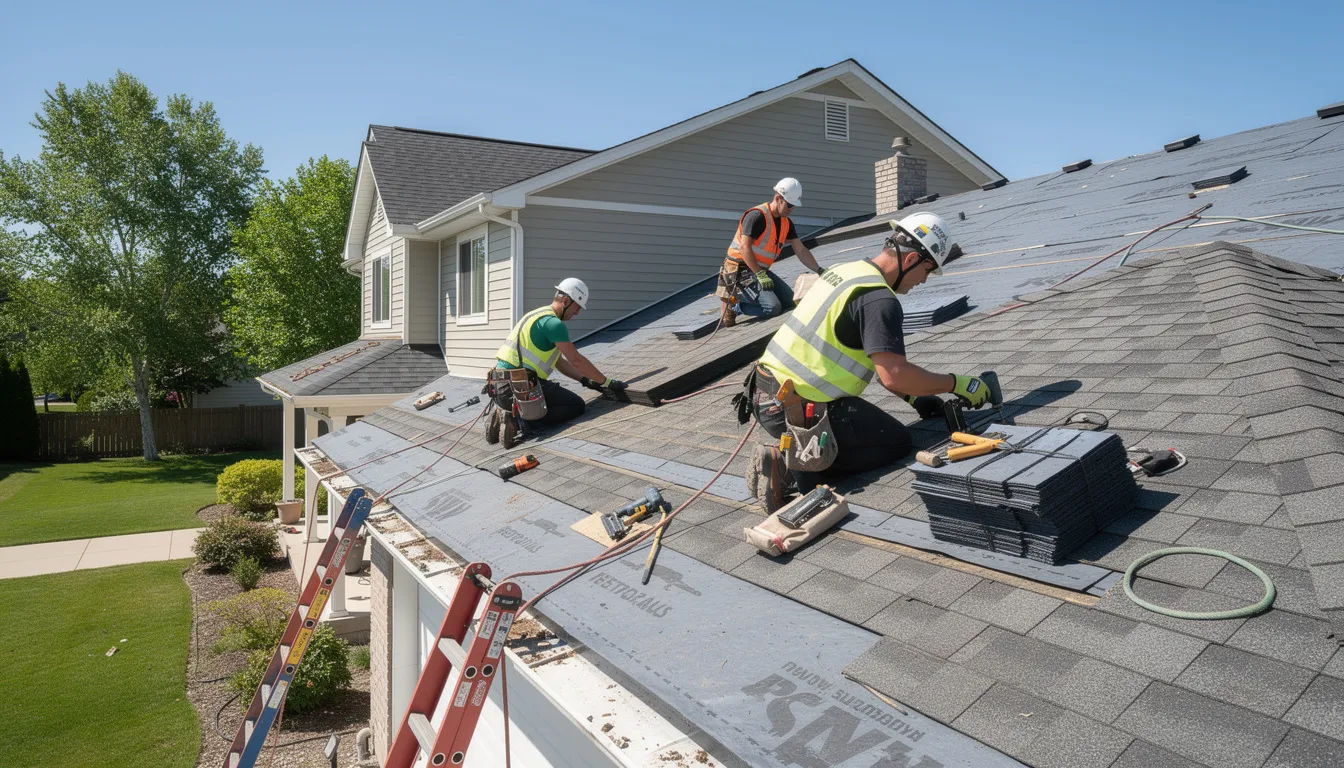
Your choice of roofing contractor affects both final cost and long-term performance more than minor material price differences. A skilled installer using good materials will outperform a cheap installer using premium roofing materials every time.
What to Look For in a Local Roofer
Prioritise licensed building practitioners (LBPs) or experienced roofing specialists with at least 5–10 years’ track record in South Auckland suburbs. Local knowledge matters—contractors familiar with specific suburb conditions deliver better outcomes.
Essential checks before hiring:
- Current public liability insurance (request a copy)
- Written health and safety plan, especially for two-storey or steep residential roofs
- Written workmanship warranty (typically 5–10 years)
- Product warranty backed by the material manufacturer
- 2–3 recent local references (jobs in Papatoetoe, Manukau, Papakura in the last 12–24 months)
If possible, drive past a completed job to see the finished work firsthand. A well-executed roof depends on attention to detail that’s visible from the street—straight lines, neat flashings, and proper gutter alignment.
Clear communication about start dates, timeframes, and dealing with unexpected problems is a good sign. Contractors who respond promptly and explain things clearly during the quote process typically maintain that standard throughout the job. If you’re considering a new roof, understanding the cost to reroof a garage in NZ can help you set realistic expectations and choose the right contractor.
Questions to Ask Before Accepting a Quote
Before signing with any roofing contractor, get clear answers to these questions:
- What exactly is included? (Removal, disposal, scaffold, flashings, gutters, insulation)
- How will you handle bad weather delays?
- What happens if rotten timber or asbestos is found once the roof is opened?
- Are council consents required for my job, and who obtains them?
- What are the payment terms and schedule?
All verbal promises should be reflected in the written contract or quote, including start and approximate completion dates. Get various factors affecting price confirmed in writing.
Typical payment structure:
- Deposit: 10–20% on contract signing
- Progress payments: For larger jobs, at agreed milestones
- Final payment: After completion, sign-off, and leak checks
Red flags to watch for:
- Unusually low quotes with vague detail
- Refusal to itemise costs
- Pressure to pay cash upfront without documentation
- No fixed business address or phone number
- Unwillingness to provide references
FAQ: Cost of Roofing in South Auckland
How often do South Auckland roofs typically need replacing?
Standard metal roofing, when maintained properly, lasts 40–50+ years in Auckland’s climate. Concrete and clay tiles can last 50–60 years with proper maintenance, though clips and flashings may need attention earlier. Asphalt shingles typically need replacement after 20–30 years. Flat membrane roofs usually last 20–30 years depending on quality and UV exposure.
Is a partial reroof a good option in South Auckland?
Partial reroofing can be a cost effective option when damage is isolated to one section. However, matching colours with the existing roof is often difficult as metal fades over time, and the junction where new meets old creates a potential leak line if not properly detailed. For roofs over 15–20 years old, full replacement often provides better long-term value.
How long does a typical South Auckland reroof take?
Simple single-storey jobs on residential roofs typically take 2–5 working days in good weather. Large, complex, or two-storey homes may require 1–3 weeks including setup and finishing. Weather delays are common in Auckland—allow schedule flexibility and discuss contingency plans with your contractor.
Is roof painting a cheaper alternative to full reroofing?
Roof painting can extend the life of a sound metal roof for 10–15 years at a cost of $3,000–$10,000 depending on roof size and condition. However, painting is not suitable where there’s significant corrosion, substrate failure, or significant damage to the roof structure. A good contractor will honestly assess whether painting is viable or whether you’re better investing in full replacement.
Do I need council consent to reroof my South Auckland home?
Like-for-like replacement using similar materials generally doesn’t require building consent in Auckland. However, changes in roof pitch, structural modifications, adding habitable space beneath the roof, or installing skylights can trigger consent requirements. If you have any government grants or subsidies involved, ensure work complies with all conditions. Your contractor should advise on consent requirements during the quote process, but ultimately responsibility lies with the property owner.
How much does a roof replacement cost in South Auckland?
Roof replacement costs in South Auckland typically range between $12,000 and $50,000, depending on roof size, material choice, and project complexity. Basic re-roofing jobs can start from around $8,000, while larger or more complex homes may cost more.
What is the average roofing cost per square metre in South Auckland?
For a full roof replacement in South Auckland, prices usually average between $120 and $250 per square metre, including materials and labour. Final pricing depends on roof access, pitch, and material selection.
How much does it cost to remove and dispose of an old roof?
Removing and disposing of an old roof in Auckland generally costs $20 to $50 per square metre. This cost may increase if structural repairs or hazardous materials are discovered.
What are typical labour rates for roofers in Auckland?
Roofing labour rates in Auckland usually range from $80 to $90 per hour, with labour accounting for approximately 30% to 50% of the total project cost. Experienced local roofers ensure the job is done safely, efficiently, and to code.
How much does scaffolding add to a roofing project?
Scaffolding costs in South Auckland typically add $2,000 to $5,000 to a roofing project. This is essential for safety and compliance, especially for multi-storey homes or steep roofs.
What roofing services does South Auckland Roofing Company provide?
South Auckland Roofing Company offers a complete range of services including:
- New roof installations
- Re-roofing and full replacements
- Roof repairs and leak fixes
- Ongoing roof maintenance and upkeep
- Residential and commercial roofing solutions
What roofing materials are most popular in South Auckland?
Common roofing materials and average costs per square metre in New Zealand include:
- Asphalt shingles: $50 – $70
- Metal roofing: $80 – $110
- Concrete tiles: $70 – $100
- Clay tiles: $120 – $160
- Wooden shingles: $140 – $180
- Slate roofing: $200 – $300
South Auckland Roofing Company helps homeowners choose cost-effective materials that suit local weather conditions.
How long do different roofing materials last?
- Asphalt shingles: 15–20 years
- Metal roofs: 40–70 years
- Tile roofs (concrete or clay): 50+ years
Choosing durable materials and professional installation significantly extends roof lifespan.
What factors affect the cost of a roofing project?
Key factors influencing roofing costs include:
- Roof size and pitch
- Material choice
- Design complexity
- Site access difficulty
- Existing roof condition
- Additional features like insulation or skylights
South Auckland Roofing Company provides detailed assessments to ensure accurate pricing.
Does roof complexity increase the overall cost?
Yes. Complex roof designs increase labour time, material waste, and safety requirements, which can raise overall costs. Difficult access can also increase equipment and labour expenses.
Is metal roofing cheaper than tile roofing?
In most cases, metal roofing is more cost-effective than tile roofing, both in installation and long-term maintenance. It also offers excellent durability for South Auckland’s climate.
How can homeowners reduce roofing costs?
Homeowners can manage costs by:
- Scheduling work during off-peak seasons
- Choosing durable, cost-effective materials
- Maintaining their roof regularly
- Including a 10–15% contingency fund for unexpected repairs
Why is regular roof maintenance important?
Regular roof maintenance helps:
- Extend roof lifespan
- Prevent leaks and structural damage
- Avoid costly emergency repairs
South Auckland Roofing Company offers maintenance services to protect your investment.
Should I get multiple roofing quotes?
Yes. Homeowners are strongly advised to obtain multiple detailed quotes from reputable local roofers to compare pricing, materials, and scope of work. When making your decision, it’s also important to understand the different roof types available, their benefits, and how they suit your home.
What should I check before hiring a roofing contractor?
Before hiring a roofer, always:
- Verify licences and insurance
- Ask for references
- Request a written contract
- Ensure compliance with local regulations
South Auckland Roofing Company prioritises transparency, safety, and quality workmanship.
Are there grants or subsidies available for roofing projects?
In some cases, homeowners may qualify for government grants or subsidies, especially for insulation or energy-efficient upgrades. It’s worth checking eligibility during the planning stage.
Conclusion
Understanding the cost of roofing in South Auckland is essential for homeowners and businesses planning a roofing project in 2026. With prices typically ranging between $12,000 and $50,000 depending on roof size, material choice, and complexity, budgeting carefully is key to avoiding unexpected expenses. Factors such as roof pitch, access challenges, and the condition of the existing roof can significantly influence labor costs and overall pricing.
Choosing the right roofing materials—whether durable long-run metal, concrete tiles, or asphalt shingles—can impact both upfront costs and long-term maintenance expenses. Engaging a reliable roofing contractor who is licensed, insured, and experienced in South Auckland ensures quality workmanship and compliance with local building codes.
To manage costs effectively, gather multiple detailed quotes, plan your project timing to take advantage of off-peak seasons, and consider including a contingency fund for unforeseen issues. Regular roof maintenance also plays a crucial role in extending the lifespan of your roof and protecting your investment.
By staying informed and working with trusted professionals, you can achieve a cost-effective roofing solution that enhances your property’s value, energy efficiency, and durability. For personalized advice and accurate estimates, reach out to reputable South Auckland roofing companies and start your roofing project with confidence.